
 AFM Probes
 Calibration Standards
 AFM Resources
 Distributors
AFM Resources
Bio-Based Wax Interfaces for Droplet Energy Harvesting at Fluoropolymer-Like Output Levels
AFM probes used in the publication
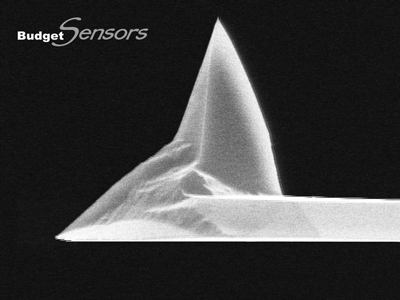
Multi75E-G
Tip Shape: Rotated
-
F75 kHz
-
C3 N/m
-
L225 µm
Abstract
Droplet impact and rebound on solid surfaces has emerged as a promising method for energy harvesting, typically demonstrated using fluorinated polymers that generate high voltages via liquid–solid contact electrification. However, these materials are non-degradable and environmentally unsustainable. To address this limitation, bio-based waxes - selected by their potential role in environmental electrification processes - are explored as sustainable alternatives. Voltage, current, and charge generation are systematically analyzed from water droplets impacting wax-coated surfaces. Remarkably, natural waxes such as beeswax, operculum wax, and epicuticular plant waxes produced peak voltages up to 500 V and comparable current levels (≈20–40 µA, 10–20 mW peak power) to fluorinated materials under identical conditions. Building on these findings, a flexible, modular, and biodegradable droplet energy harvester is designed using zinc electrodes and wax-coated electrification sites. By guiding droplets through predefined sliding paths and gates, multiple energy harvesting events per droplet are achieved. These results demonstrate that high-performance droplet energy harvesting is possible using sustainable materials and tunable harvester design. Additionally, they reveal the need for further investigation of the liquid-solid electrification mechanism on non-fluorinated surfaces, both in engineered systems and in nature.