
 AFM Probes
 Calibration Standards
 AFM Resources
 Distributors
AFM Resources
Back
Pyrene-Derived Carbon Nanomembranes Selectively Pass Metal Ions in Water
AFM probes used in the publication
Best Seller
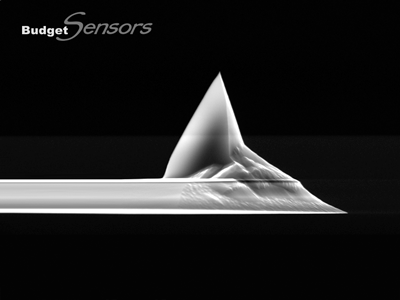
Tap300Al-G
Tapping Mode AFM Probe with Aluminum Reflective Coating
Coating: Reflective Aluminum
Tip Shape: Rotated
Tip Shape: Rotated
AFM Cantilever:
-
F300 kHz
-
C40 N/m
-
L125 µm
Abstract
Despite the potential environmental benefits, the use of membranes for extracting, reclaiming, and purifying alkali metals from aqueous feedstocks remains challenging due to low inter-cation selectivity. Two-dimensional materials equipped with nanoscale pores have revealed intriguing performance in ion separation, but their practical implementation is bottlenecked by the perforation procedures. This work presents electrodialysis experiments with intrinsically porous carbon nanomembranes (CNMs) that are featured by a high areal density of sub-nanometer channels. The free-standing membranes prepared from pyrene are shown to have great mechanical strength and a narrow pore size distribution enabling selective passage of metal ions. CNMs can sieve hydrated cations following the order K+ > Na+ > Li+ > Ca2+ > Mg2+, while the K+/Mg2+, Na+/Mg2+, Li+/Mg2+ selectivity amounts to 220, 86, and 13 respectively. It is found that the ion transport selectivity is attributed to the combined effect of the small pore dimensions and electrostatic exclusion induced by surface charges. It has been also observed that the membrane thickness in the range from 3 to 6.5 nm has little impact on the ion transport which suggests interesting implications for ion batteries and other energy conversion systems.