
 AFM Probes
 Calibration Standards
 AFM Resources
 Distributors
AFM Resources
Back
The TCNFs as an Efficient Adsorbent for Iron and Zinc Extraction from Aqueous Solutions: Chemometrics and Kinetics Studies
AFM probes used in the publication
Best Seller
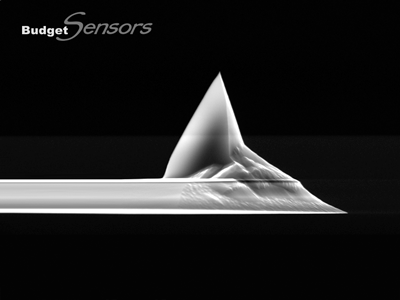
Tap300Al-G
Tapping Mode AFM Probe with Aluminum Reflective Coating
Coating: Reflective Aluminum
Tip Shape: Rotated
Tip Shape: Rotated
AFM Cantilever:
-
F300 kHz
-
C40 N/m
-
L125 µm
Abstract
Metal contamination of industrial water is a very important problem that is directly related to human activities. Heavy metals present as cations in water media can be efficiently removed using adsorption, for example, due to the use of biomass-derived materials. In the current study, TEMPO-oxidized α-cellulose nanofibers (TCNFs) were proposed as a low-cost natural adsorbent for iron and zinc cation removal from aqueous solutions. Defibrillated and carboxilated natural precursor (α-cellulose) resulted in the nanofibers and were characterized by means of AFM and IR-ATR. For the first time, the infrared spectra were preprocessed and underwent multivariate analysis (PCA, k-means/hierarchical clustering, NIPALS-DA with 4-fold cross-validation), revealing successful functionalization. Atomic force microscopy confirmed the nanometric nature of the fibers, presenting the mean diameter at approximately 15.9 nm and the length of 2.4 μm. The adsorption tests were performed in the presence of 0.01 M NaCl solutions with Fe3+, Zn2+, and mixtures thereof, where the nanofibers were suspended at room temperature. The adsorption kinetics was studied assessing process stability, and the adsorption isotherms were analyzed. The obtained deliverables indicated a noticeable potential of TCNFs for adsorbing both iron and zinc ions from their individual solutions at the maximum adsorptive capacities of 5.79 × 10³ mg g–1 and 5.59 × 10³ mg g–1, respectively. Adsorption kinetics was well described with the pseudo-second order model (R2 > 0.99), and the isotherm was fitted in accordance with the Freundlich model (R2 > 0.99). The Freundlich model’s parameters indicated a higher affinity of iron cations to the nanofibers’ carboxylate surface groups, as compared to zinc. Also, the chemometrical analysis coupled with IR-ATR allowed us to propose a procedure to classify TCNFs and α-cellulose with the help of key spectral regions at 100% accuracy.